The short answer
For most indoor potted plants, the safest vacation watering plan is the simplest setup you can test for several days before you leave. A short trip may only require normal thorough watering, moving pots out of hot direct sun, and grouping plants away from heat or cold drafts (Clemson Extension; University of Maryland Extension). For longer trips—or for small pots and moisture-loving plants—passive ceramic cones, wick systems, or a low-flow indoor drip kit can help, provided you run a trial first so you do not return to dry reservoirs, siphoned water, or waterlogged roots (Iowa State University Extension).
Who this is for: Home gardeners with indoor houseplants in containers with drainage holes.
When not to rely on a device alone: Newly repotted plants, high-value specimens, very large floor plants, or mixed collections with wildly different water needs are often safer with a brief check-in from a friend or plant sitter.
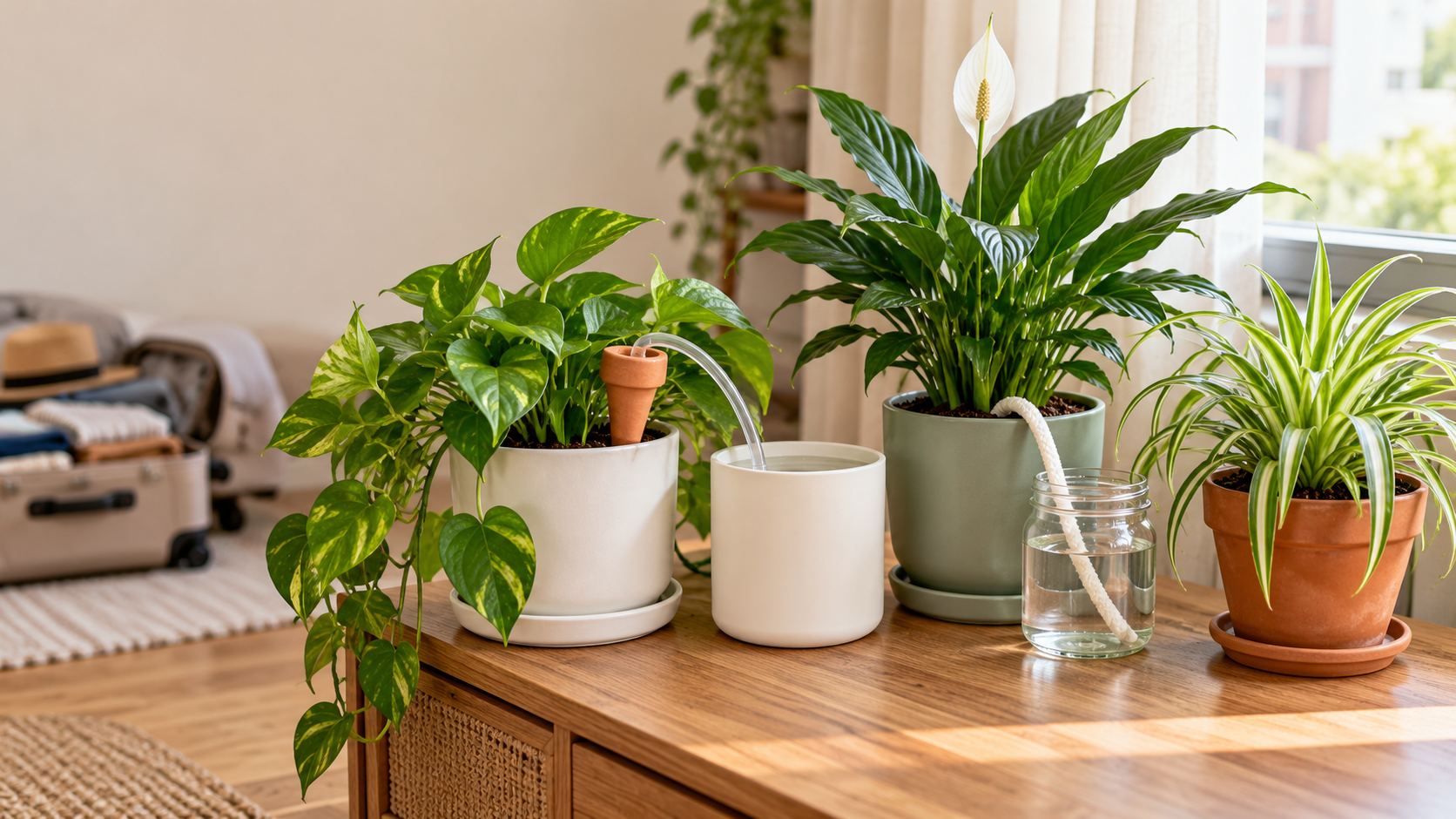
Start by checking whether you need a watering device at all
How fast an indoor pot dries depends on container size and material, potting mix, plant foliage area, light intensity, and room temperature and humidity (University of Minnesota Extension; Clemson Extension). Before buying or rigging up hardware, sort your pots by how they behave in a normal week:
- Drought-tolerant plants in medium or larger pots (such as snake plants, ZZ plants, or many succulents) often go a week or more between waterings and should not be hooked up to a constant water feed.
- Most established foliage plants can handle a short trip when watered thoroughly until water drains from the bottom, allowed to drain in the saucer, and moved slightly back from hot sunny glass and heating or cooling vents (University of Maryland Extension).
- Small pots, unglazed clay pots, and moisture-loving plants dry out much faster and are the main candidates for a passive wick, porous ceramic cone, or calibrated drip setup (Iowa State University Extension).
Which vacation watering method fits your situation?
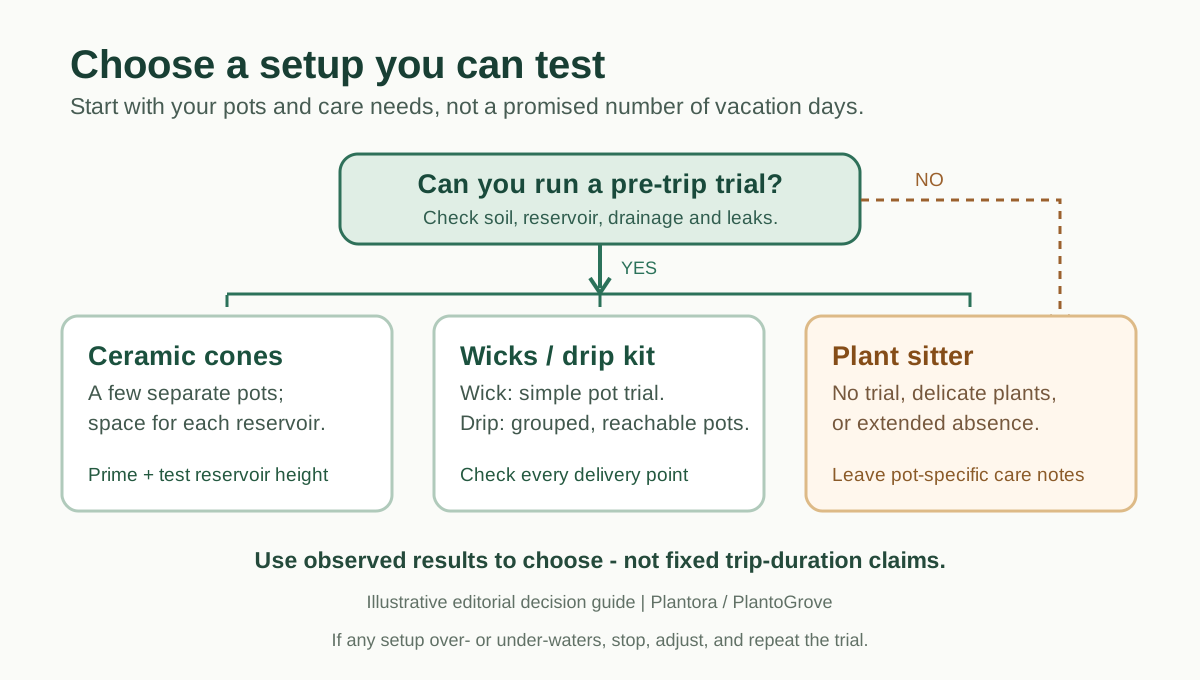
Use this comparison to match each pot—or group of similar pots—to the simplest method that fits its moisture use.
| Method | How it works | Best fit | Main limitation to test before leaving |
|---|---|---|---|
| Thorough watering + light/location adjustment (no device) | Water normally until it drains, empty the saucer, and move pots slightly back from hot sun or vents | Short trips and sturdy established houseplants | Small pots or thirsty species may still dry out before you return |
| Passive wick + water reservoir | A braided cotton/nylon wick draws water from a nearby jar into damp potting mix by capillary action | 1 to a few small or medium indoor pots | Wick must stay presoaked and in firm soil contact; high reservoirs can over-wet small pots |
| Porous ceramic watering cone + reservoir tube | A soaked clay cone in the root zone pulls water from a nearby container as surrounding soil dries | Individual medium indoor pots needing steady moisture | Reservoir height relative to the pot changes flow rate; requires a multi-day trial |
| Powered indoor micro-drip kit | A small pump and timer deliver scheduled doses from a bucket or jug through tubing and emitters | Grouped indoor pots when you have time to calibrate | Shared schedule can overwater slower-drying pots; requires anti-siphon check and dry electrical setup |
| Human plant sitter + written pot notes | A neighbor or friend checks soil and waters only the pots that need it | Long trips, mixed plant types, or when a device trial fails | Needs clear instructions so helpers do not water every pot on the same schedule |
How to set up and test your vacation watering system before you leave
Never install an unattended watering device the night before departure. Set it up several days early so you can watch the reservoir level and check the potting mix (Iowa State University Extension).
-
01
1. Group pots by actual moisture need, not convenience
Separate drought-tolerant plants that can wait until you return from smaller pots or foliage plants that dry out within a few days. Every pot on a vacation watering setup should have a working drainage hole and a waterproof saucer or tray underneath (Clemson Extension).
-
02
2. Water normally and prepare the wick, cone, or tubing
Water the potting mix thoroughly until excess drains from the bottom, then empty the saucer before starting the device trial. Presoak cotton wicks or porous ceramic cones completely and eliminate trapped air bubbles in cones and supply tubes according to the manufacturer’s instructions (Blumat Classic instructions; UMD Extension).
-
03
3. Set the reservoir height and protect floors and outlets
Place the water container on a stable waterproof tray at the height recommended for your method—keeping the water level at or below the pot rim or pump anti-siphon point unless instructions specify otherwise (Blumat; RainPoint manuals). Keep all reservoirs, drip tubing, and saucers clear of electrical outlets, power strips, wood furniture, and carpet.
-
04
4. Mark the starting water line and observe for several days
Put a piece of tape or a marker line at the starting water level on the reservoir. Over the next several days (or at least 2 to 3 scheduled pump cycles), check the water line, feel the top few inches of potting mix, and inspect the saucer for standing water or leaks.
-
05
5. Adjust—or switch to a simpler plan—before departure day
If the potting mix is overly wet, lower the reservoir, shorten the pump duration, or disconnect the device. If the soil is drying out while the reservoir stays full, reseat and re-prime the cone or wick. If a setup still behaves unpredictably, discontinue it before your trip and rely on normal watering plus a plant sitter check-in.
Common vacation watering problems and how to fix them during your trial
| What you observe during the trial | Likely cause | What to change before you leave |
|---|---|---|
| Reservoir drops fast and the saucer overflows | Reservoir sits too high above the pot, creating a siphon, or pump runtime is too long | Lower the water container so the water line is at or below the pot rim/pump level, or shorten pump duration |
| Soil dries out while the reservoir stays full | Air bubble in cone/tubing, dry unprimed wick, or poor contact with potting mix | Resoak and refill the cone, prime the tubing, and press the cone or wick firmly into moist soil |
| One pot in a drip group is soggy while another is dry | Different pot sizes or plant types sharing one timer schedule | Remove slow-drying pots from the shared pump line and group only similar pots together |
| Leaves yellow or droop even though soil feels wet | Persistent saturation and low root oxygen in a poorly drained container | Stop continuous watering, empty standing water from the saucer or cachepot, and let the upper mix aerate |
Optional supplies if you want a ready-made setup
Many short trips require no new gear—thorough watering, moving pots back from hot window glass, or a presoaked cotton wick in a clean jar often suffices. If you prefer a ready-made porous cone or programmable drip kit, the two options below match the passive-cone and grouped-drip methods discussed above.
Affiliate Disclosure: As an Amazon Associate I earn from qualifying purchases.
Blumat Classic Plant Watering Stakes, 3 Pack, with Adapter
Porous clay cones that draw water from a nearby bottle or container as surrounding potting mix dries. Best suited to 1 to a few medium indoor pots when presoaked, filled without air bubbles, and tested for reservoir height over several days before travel (Blumat Classic instructions).
RAINPOINT Large Display Automatic Plant Waterer for Indoor Pots, IK153-family LCD drip kit
Scheduled indoor pump and tubing kit for a group of pots with similar moisture needs. Requires calibrating run duration and interval across multiple test cycles and checking anti-siphon placement before departure (RainPoint manuals).
Vacation Watering: Pre-Trip Decision and Observation Sheet (PDF)
Includes a pre-trip method decision path and pot/reservoir inventory on Page 1, plus a 5-point trial setup checklist and 6-row observation log on Page 2.
Frequently asked questions
Can I just leave my houseplants sitting in a tray or bathtub of water while I travel?
Avoid leaving indoor pots sitting in deep standing water. University Extension guides note that continuously saturated potting mix deprives roots of oxygen and encourages root rot. Instead, water thoroughly, let excess drain out, and use a tested wick, porous cone, or human check-in if supplemental water is needed.
How many days before my vacation should I test a watering system?
Start your trial several days before departure—long enough to watch the reservoir level drop and check the potting mix and saucer across multiple days or pump cycles. Setting up a device for the first time on departure day leaves no time to catch siphoning or airlocks.
Why did my watering cone or wick empty the whole jar so quickly?
When the water level in the reservoir sits higher than the pot or emitter, gravity can push water through a wick, cone, or tube much faster than the plant uses it. Lower the reservoir so the water line sits at or below the pot rim and re-test.
When is a friend or plant sitter better than a watering device?
Choose a human check-in whenever you have a long trip, a diverse collection with very different pot sizes and water needs, newly repotted or high-value plants, or any setup that fails its pre-trip trial. Leave clear labels on which pots to check and which to skip.
The bottom line
Match your vacation watering plan to how quickly each indoor pot actually dries, and never trust an untested cone, wick, or drip kit on departure night. Run a multi-day trial with a marked reservoir, verify that saucers stay clear of overflow, and switch to normal watering or a plant sitter whenever a setup behaves unpredictably.
Sources
- Clemson Cooperative Extension Home & Garden Information Center — Watering Indoor Plants (HGIC 1459)
- University of Minnesota Extension — Watering Houseplants
- University of Maryland Extension — Caring for Houseplants While on Vacation
- Iowa State University Extension and Outreach — How to Care for Houseplants While Traveling
- Blumat — Blumat Classic Setup & Operating Instructions
- RainPoint — RainPoint Automatic Watering Devices Product Manuals