The short answer
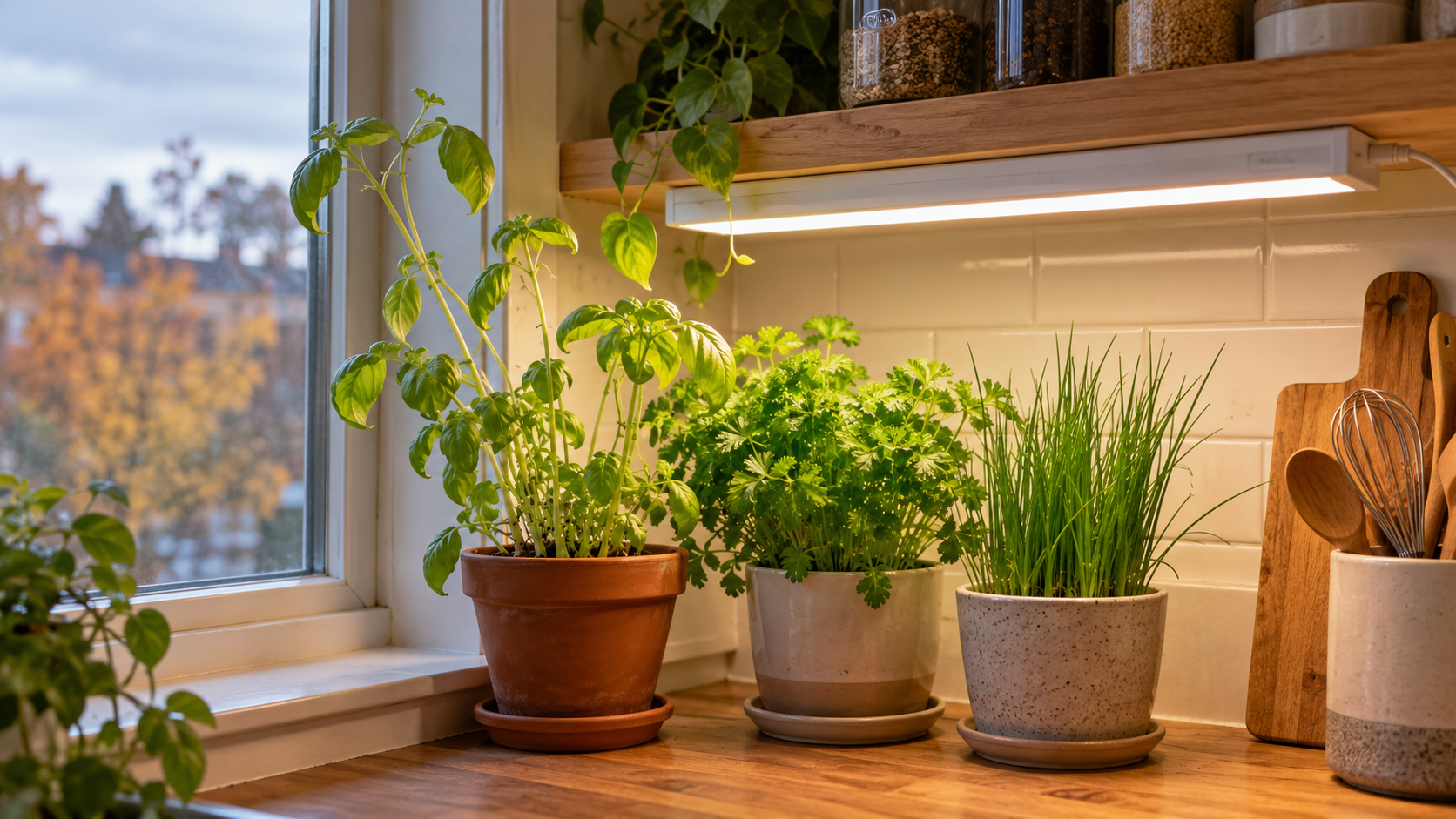
If basil or other kitchen herbs are producing long, thin stems and wide gaps between leaves during winter, inadequate light is a likely cause. Start by checking how many hours of direct sunlight reach the leaves—not just whether the room looks bright. Move the pots to a suitable brighter window if you have one, or add a well-positioned white/full-spectrum grow light on a timer. Iowa State University Extension suggests a light positioned roughly 6–12 inches (15–30 cm) from herb leaves and 12–16 hours of supplemental lighting daily, with the exact position adjusted to the fixture and plant response. Existing stretched stems will not shrink; judge improvement by sturdier new growth.
This approach is for herbs in indoor containers with functioning drainage. It will not save plants with major root damage, pests, disease, chilling injury, or persistent overwatering by itself.
First: is it really a light problem?
Look for two or more of these signs: unusually long gaps between successive leaves (internodes), stems leaning strongly toward the nearest window, new leaves emerging smaller or paler than older ones, and soft, floppy stems that struggle to stay upright. Iowa State University Extension notes that insufficient indoor light causes long, weak stems and wide internodes.
Before adding a light, rule out non-light problems that can make herbs wilt or stall in winter:
- Overwatering and poor drainage: Cooler indoor air and shorter days slow water use. Confirm every pot has drainage holes and empty standing water from saucers (UMN Extension).
- Cold window drafts or heater blasts: Windowsills can turn icy overnight, especially harming cold-sensitive basil, while nearby heating vents dry foliage rapidly.
- Pests or root rot: Check undersides of leaves, stem joints, and the soil surface for insects before blaming lighting alone.
Window light vs. an indoor grow light
Human eyes adapt well to indoor lighting, so a kitchen counter that looks bright to you may still feel dim to sun-loving herbs. According to Iowa State University Extension and University of Minnesota Extension, most indoor herbs need a sunny window receiving at least 6 hours of direct sunlight daily—most reliably from an unobstructed south- or west-facing window.
During late fall and winter, short days, low sun angles, roof overhangs, neighbouring buildings, or north- and east-facing windows often drop direct sun well below that threshold. Basil is especially light-hungry and warmth-sensitive; parsley and chives tolerate slightly cooler rooms and moderate winter sun better, though they also become sparse in dim corners. When your brightest safe windowsill cannot provide enough winter sun, a compact overhead LED grow light bridges the gap.
Set up a compact winter herb station
Follow these steps to set up supplemental lighting and evaluate how your herbs respond over the next 2 to 4 weeks:
-
1.
Confirm the symptoms and rule out root or temperature stress
Inspect your herbs for wide gaps between leaves, leaning stems, and pale or floppy new growth. Check that every pot has working drainage holes, empty standing water from saucers, and make sure the pots are not pressed against freezing window glass or sitting directly in a hot air vent.
Why it matters: Soggy potting mix, root rot, cold injury (especially on cold-sensitive basil), or pests can weaken stems even when light is adequate.
-
2.
Count actual direct winter sun hours vs. supplemental light needs
Observe your windowsill across a clear winter day. If the leaves receive fewer than roughly 6 hours of direct sunlight—common in north, east, or shaded windows during winter—move the pots to an unobstructed south- or west-facing window or add a white/full-spectrum LED grow light above the foliage.
Why it matters: Short winter days and low sun angles dramatically reduce indoor light intensity compared with outdoor summer sun.
-
3.
Position the grow light 6–12 inches above the herb canopy
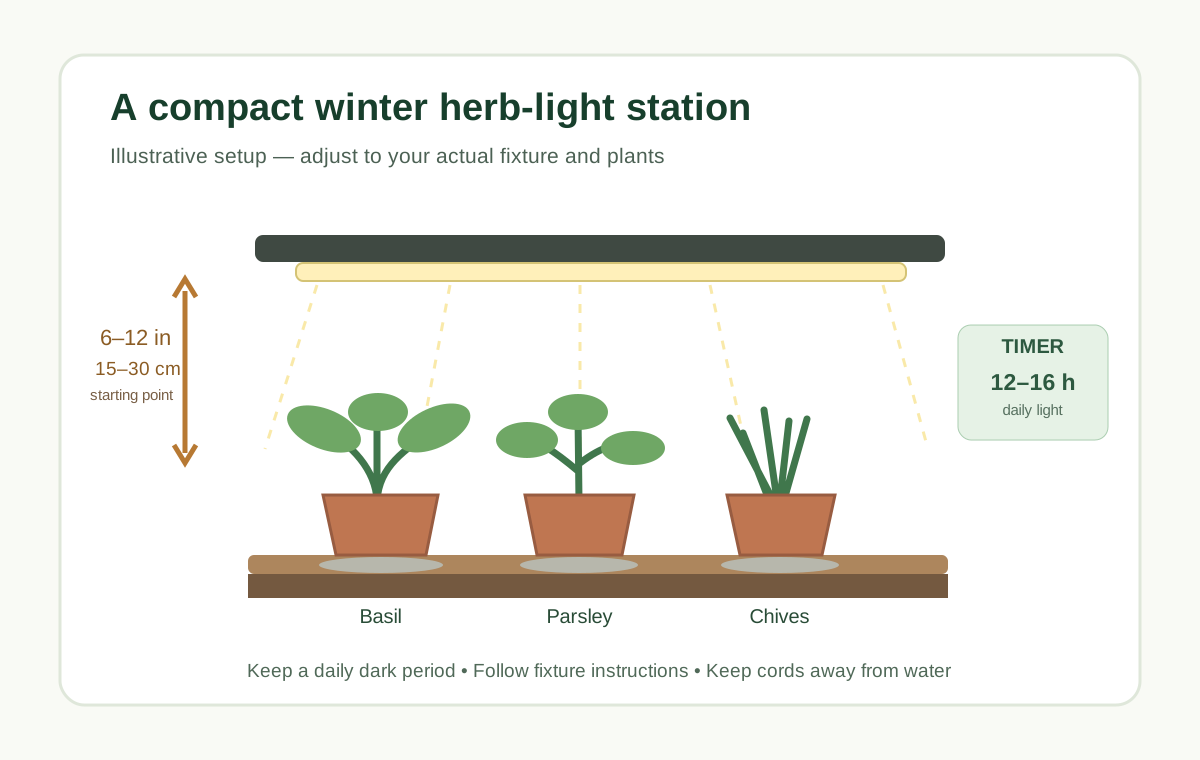
Mount or suspend a white/full-spectrum LED bar or fixture directly over the herbs so the light shines down on the top leaves rather than from the side. Start roughly 6–12 inches (15–30 cm) above the tallest leaves as an Extension starting point, while always following your specific fixture’s manufacturer instructions and heat clearance.
Why it matters: Light intensity drops rapidly with distance; placing a low-heat LED bar close above the canopy delivers usable light without scorching foliage.
-
4.
Set a daily timer for 12–16 hours on and 8–12 hours dark
Plug the grow light into a simple outlet timer set for 12–16 hours of light per day, leaving an uninterrupted 8–12 hour dark period every night.
Why it matters: Consistent daily duration compensates for lower indoor light intensity while preserving the dark period plants need for normal respiration and physiology.
-
5.
Pinch leggy tips lightly and track new growth over 2–4 weeks
Once stronger light is in place and the plant is healthy enough, pinch or trim overly stretched soft tips just above a pair of leaves to encourage compact branching. Check the top inch of potting mix before watering, and evaluate new top growth over 2 to 4 weeks.
Why it matters: Old elongated internodes cannot contract, so success is measured by tighter node spacing and firmer stems on new growth emerging under improved light.
Troubleshooting: what your herbs are telling you
Use the newest top leaves and stems—not older stretched growth—to adjust your setup:
| What you see | Likely cause | Practical adjustment |
|---|---|---|
| New growth still has wide gaps between leaves and leans sideways | Light is still too far away, offset to one side, or running too few hours | Center the fixture directly above the pots, lower it slightly within the 6–12 inch range (if cool enough), and confirm the timer runs 12–16 hours daily. |
| Upper leaves look bleached, crisp, or curled closest to the lamp | Fixture is too close or generating localized heat/light stress | Raise the light a few inches immediately, check hand-level warmth above the top leaves, and verify manufacturer clearance guidelines. |
| Lower leaves yellowing and stems soft while soil stays wet for days | Overwatering or blocked drainage in cool winter conditions | Check drainage holes, empty saucers, and wait until the top layer of potting mix begins to dry before watering again. |
| Basil leaves blackening or collapsing near a window at night | Cold draft or chilling injury near cold glass | Move basil back from freezing windowpanes at night or relocate the herb station to a warmer interior counter under a grow light. |
Is a grow light always needed?
No. If you have an unobstructed south- or west-facing window that stays warm and delivers at least 6 hours of direct sun, rotating your pots regularly may be all you need. If your kitchen lacks direct winter sun or your windowsill is too cold for basil, a simple plug-in white LED bar mounted under a cabinet or shelf is a practical option.
Barrina T5 1-foot 5000K Full Spectrum LED Grow Lights, 4-pack (MC05)
Compact 1-foot 5000K white/full-spectrum LED bars suitable for small under-cabinet or shelf herb stations where winter window sun is insufficient. See manufacturer specifications for mounting and clearance details.
Kitchen Herb Light Setup & Observation Sheet (PDF)
Includes a pot, drainage, and window-sun setup check on Page 1 and a 6-row weekly top-growth observation log on Page 2.
Frequently asked questions
Will leggy herb stems tighten back up after I add a grow light?
No. Stems that have already stretched will stay long. Look at the newest growth at the top tips over the next 2 to 4 weeks—shorter gaps between new leaves and sturdier stems show the light setup is working.
Do I need purple (red/blue) grow lights for kitchen herbs?
No. University Extension guides note that white or full-spectrum LED fixtures work well for indoor herbs and make it much easier to see true leaf color, nutrient issues, or pests in a kitchen.
Can I leave an indoor herb grow light on 24 hours a day?
No. Iowa State University Extension recommends 12–16 hours of supplemental light daily on a timer so plants still receive a regular nightly dark period.
Why is my basil still drooping even under a grow light?
Check soil moisture, pot drainage, and temperature first. Overwatering in slow-drying winter soil, pots without drainage holes, or cold drafts near a window commonly cause basil to droop regardless of lighting.
Are all kitchen herbs equally hungry for winter light?
Basil is especially light-demanding and warmth-sensitive indoors. Parsley and chives generally tolerate cooler kitchen temperatures and slightly lower light levels than basil, though they still grow more compactly with bright window sun or supplemental LED lighting.
The bottom line
When winter kitchen herbs stretch and lean, check drainage and temperature first, then evaluate how many hours of direct sun actually reach the leaves. If a brighter window is not available, position a white/full-spectrum LED grow light roughly 6–12 inches above the foliage on a 12–16 hour daily timer, and judge success over 2 to 4 weeks by compact, sturdy new top growth.
Sources
- Iowa State University Extension and Outreach — Growing Herbs Indoors
- Iowa State University Extension and Outreach — Growing Indoor Plants Under Supplemental Lights
- University of Minnesota Extension — Lighting for indoor plants and starting seeds
- University of Minnesota Extension — Growing herbs indoors